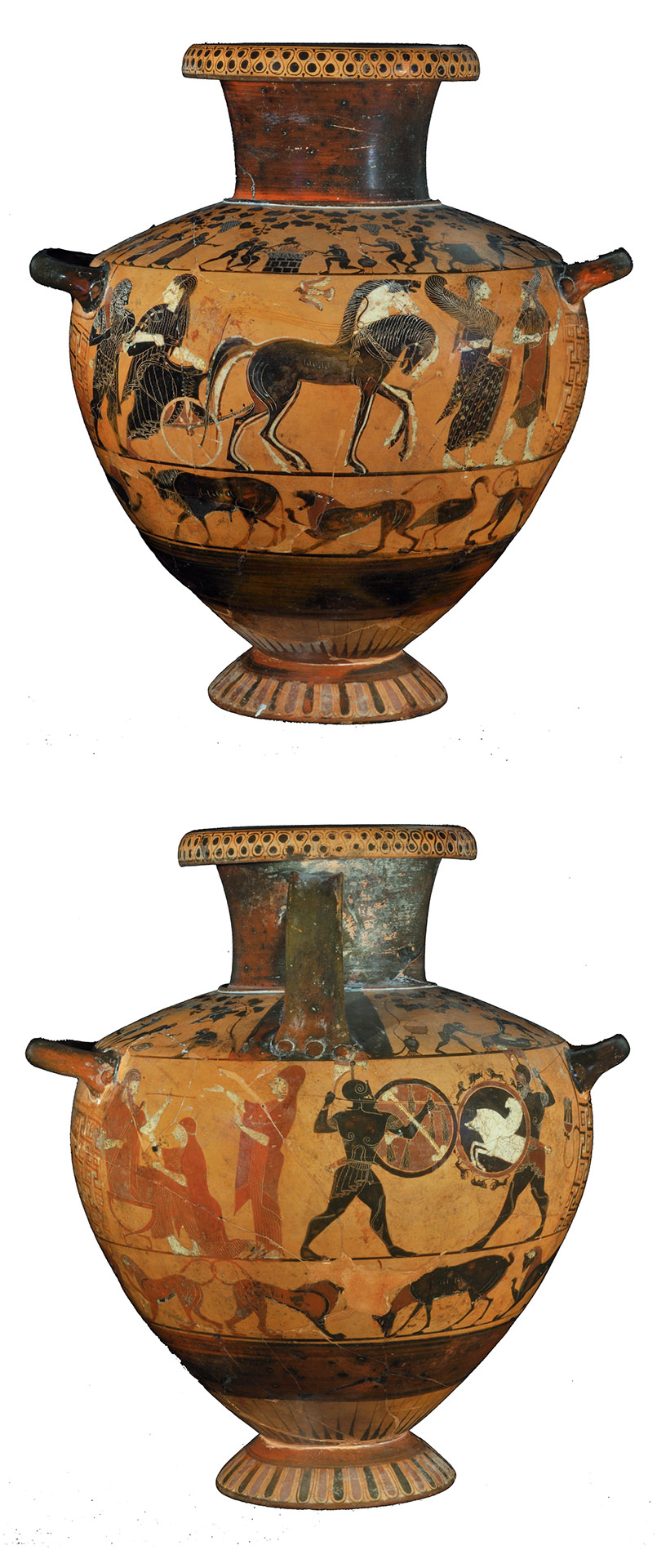
Hydria Ricci, from Cerveteri - Necropoli della Banditaccia, 530 B.C.
The hydria is a vessel used in the ancient world to collect, transport, and pour water. Its shape is easily recognizable thanks to the presence of three handles: two horizontal handles, placed on either side of the body, were used to lift the vessel, while a third vertical handle, attached to the neck, allowed its contents to be poured. Although it was created as an everyday household object, in funerary contexts the hydria acquired a profound cultural significance, serving as a prestigious object that accompanied the deceased and symbolized social and ritual practices associated with aristocratic life, reflecting beliefs about the afterlife and social status.
The Hydria Ricci is attributed to an artist from northern Ionia, in present-day Turkey, known as the Painter of Louvre E 739. This connection highlights cultural exchange between Greece and Etruria, reflecting broader Mediterranean interactions that enriched Etruscan art during the second half of the sixth century BC and fostering appreciation for cross-cultural influences.
The Hydria Ricci is considered an exceptional work both for the quality of its decoration and for the sophisticated and unusual choice of subjects represented. The carefully planned figurative programme and the attention given to every detail suggest that the vase was a unique work, made on commission. Its references to sacrifice and the ritual consumption of wine evoke the aristocratic banquet, which in the ancient Greek world was not simply a meal, but also an occasion for social interaction, the display of status, and the creation of social identity.
The images decorating the vase are arranged in a series of superimposed horizontal registers.