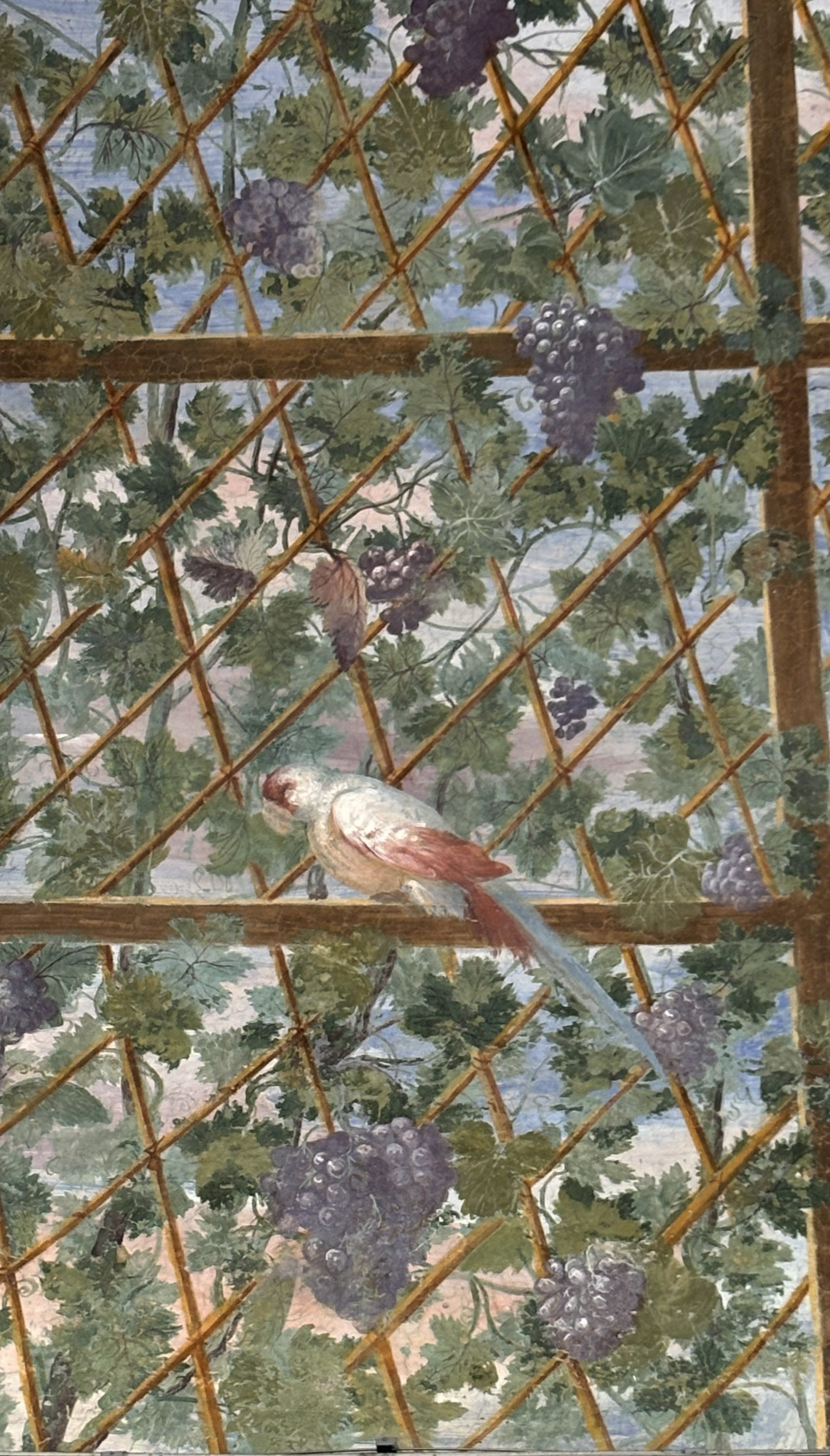
A parrot among bunches of grapes
Satyrs, the mythical companions of Dionysus, climb among its branches laden with clusters of grapes. Grapes and wine, which have long symbolized prosperity and fertility, also allude to the three vineyards on the grounds of Villa Giulia.
The vaulted ceiling is additionally enhanced by a remarkable variety of birds inhabiting the painted pergola. In addition to those already mentioned, viewers can identify doves, swallows, eagles, pheasants, hoopoes, eagle owls, herons, cockerels, and many others. Many of these species may once have been seen alive in the villa's gardens, where two aviaries were located. Even though significant on their own, these three allegorical plants achieve their full resonance within an ideal space for rejuvenation. Together, the birds, flowering plants, and fruit-laden vines create a vivid image of flourishing nature—similar to the splendid landscape that once surrounded the magnificent villa built as a retreat for Pope Julius III and his guests.
The decoration goes beyond the vaulted ceiling to cover the walls of the hemicycle in a style that was highly fashionable during the Renaissance: grotesque, a decorative style that combines fantastical plants, imaginary human figures, and curious animals in elaborate compositions.